Brave 1.97.57: Chromium 155.0.8059.80 security bump
Brave desktop Release 1.97.57 (October 14, 2026) upgrades Chromium to 155.0.8059.80, matching Chrome's mid-cycle security set. How home users update, relaunch, and verify brave://version.
83 articles
Brave desktop Release 1.97.57 (October 14, 2026) upgrades Chromium to 155.0.8059.80, matching Chrome's mid-cycle security set. How home users update, relaunch, and verify brave://version.
Microsoft shipped Edge Stable 155.0.4283.60 on October 15, 2026 with the latest Chromium security updates. How home users update, relaunch, and confirm edge://version.
On October 13, 2026 Zoom published four High security bulletins for Zoom Workplace clients. How home users update on Windows, Mac, Linux, Android, and iOS, and which versions to verify.
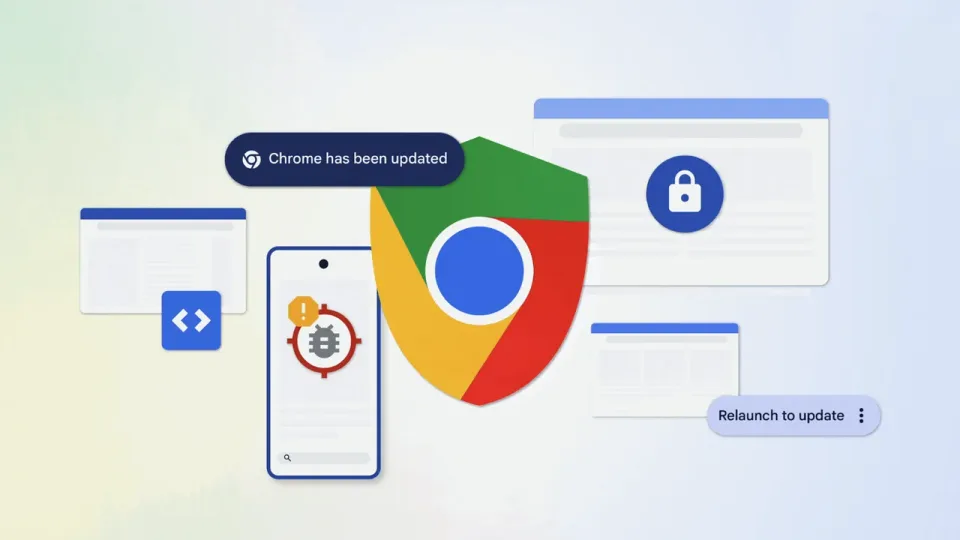
Google's October 13, 2026 Stable bump ships Chrome 155.0.8059.79/.80 with 37 security fixes, including seven Critical bugs. Android is 155.0.8059.79. Update, relaunch, confirm chrome://version.
Microsoft's October 13, 2026 updates include an actively exploited Windows Shell Mark of the Web bypass. Check for updates, reboot, confirm you are current, and update Office apps too.
Mozilla shipped Firefox 158.0 on October 13, 2026 with MFSA 2026-106, a high-impact security advisory. How home users update, relaunch, and confirm about:support.
Mozilla Thunderbird 158.0 hit Release on October 13, 2026 with security fixes plus OpenPGP, remote-content, and CardDAV repairs. How home users update and verify.
On October 9, 2026 Google moved ChromeOS and ChromeOS Flex Stable to OS 16805.33.0 (browser 154.0.8037.151) with Critical browser fixes and two High platform fixes. How home Chromebook owners check, restart, and verify.
Windows 11 version 24H2 Home and Pro stop getting monthly updates on October 13, 2026. How to check winver today, what Microsoft says about the automatic 25H2 path, and how 26H2 fits for eligible home PCs.
On October 6, 2026 Google explained Chrome's response to .gh, .sl, and .as ccTLD registry hijacks: attackers changed DNS and got unauthorized HTTPS certs; Chrome blocked them via CRLSets. Chrome users need no action.
Microsoft shipped Edge Stable 155.0.4283.45 on October 8, 2026 with the latest Chromium security updates. How home users update, relaunch, and confirm edge://version.
WordPress 7.1.3 (October 6, 2026) is a maintenance and security release with 7 security fixes and 4 bug fixes. How home and personal-site owners update via Dashboard → Updates and verify the version.
Brave desktop Release 1.97.56 (October 7, 2026) upgrades Chromium to 155.0.8059.40, matching Chrome 155's security train. How home users update, relaunch, and verify brave://version.
On October 7, 2026 Google began an Early Stable rollout of Chrome 156.0.8078.12/.13 on Windows and Mac, plus Chrome 156.0.8078.25 for a small share of Android users. How to read chrome://version without chasing the wrong train.
Google's October 6, 2026 Stable update ships Chrome 155.0.8059.39/.40 with 247 security fixes, including four Critical use-after-free bugs. Android is 155.0.8059.39. Update, relaunch, confirm chrome://version.
Mozilla released Firefox 157.0.1 on October 6, 2026 with MFSA 2026-104 (CVE-2026-106016, mitigation bypass in File Handling) plus a few everyday bug fixes. Update, relaunch, confirm about:support.
Samsung published SMR Oct-2026 Release 1 on October 6, 2026 with Google Android patches plus 27 Samsung fixes, and Samsung Internet 30.0.5.24 for CVE-2026-21132. How Galaxy owners update and verify at home.
Google published the October 2026 Android Security Bulletin on October 5. Home users should update phones and tablets to security patch level 2026-10-01 or later and verify in Settings.
Microsoft shipped Edge Stable 154.0.4258.62 on October 5, 2026 with Chromium security updates. How home users update, relaunch, and confirm edge://version.
Google's October 1, 2026 Stable desktop update ships Chrome 154.0.8037.97/.98 with 11 security fixes, including Critical CVE-2026-103628 (out-of-bounds write in WebGL). Android is 154.0.8037.126. Update, relaunch, confirm chrome://version.
As of September 30, 2026, Android developer verification protections began for app installs from participating stores in Brazil, Indonesia, Singapore, and Thailand. What changed, what has not, and practical habits for home users.
Apple's September 28, 2026 point releases patch CVE-2026-86950, a CoreGraphics out-of-bounds write that may have been exploited in a highly targeted attack. Install iOS/iPadOS 26.7.1, macOS Tahoe 26.7.1, or Sequoia 15.8.1.
Google's September 29, 2026 Stable desktop update ships Chrome 154.0.8037.92/.93 with 32 security fixes, including Critical CVE-2026-102331 in ANGLE. Android 154.0.8037.92 matches. Update, relaunch, confirm chrome://version.
Mozilla released Firefox 157.0 on September 29, 2026 with a large security advisory (76 CVEs, many High) plus Nova design themes, an encryption-key-recording warning, and Suggest expansion. Update, relaunch, confirm about:support.
WordPress 7.1.2 patches critical CVE-2026-87902. Attackers started probing within hours. How personal and small-site owners should update today and confirm the version.
Google promoted Chrome 154 to desktop Stable on September 22, 2026 with 108 security fixes, including many Critical bugs. iOS Chrome 154.0.8037.55 is also out. Update, relaunch, confirm chrome://version.
Google's September 17, 2026 Stable desktop update ships Chrome 153.0.8010.52/.53 with 16 security fixes, including two Critical Dawn/WebGPU and WebGL bugs. Update, relaunch, confirm chrome://version.
WordPress 7.1.1 is a maintenance and security release with 11 security fixes. How personal and small-site owners should update today, what the fixes mean in plain language, and what to confirm after.
Mozilla released Firefox 156.0 on September 15, 2026 with a faster PDF viewer, better large JPEG handling, a macOS launch-at-startup setting, Suggest in FR/DE/IT, and security fixes. How to update and check about:support.
Staying on macOS Tahoe 26 or Sequoia 15? Install Apple's September 14, 2026 point releases (26.7 and 15.8) from Software Update, then confirm About. Separate from macOS 27 Golden Gate.
A home-reader guide to Chrome, Edge, and Firefox extensions: list what you installed, remove junk, and distrust free VPN, coupon, and PDF add-ons that ask for broad permissions.
Google promoted Chrome 153 to desktop Stable on September 8, 2026 with 230 security fixes. Update on Windows, Mac, or Linux, fully quit and relaunch, then confirm chrome://version shows 153.0.8010.x.
Microsoft's September 8, 2026 updates include two exploited local privilege bugs plus Office Preview Pane risks. Check for updates, reboot, and confirm you are current.
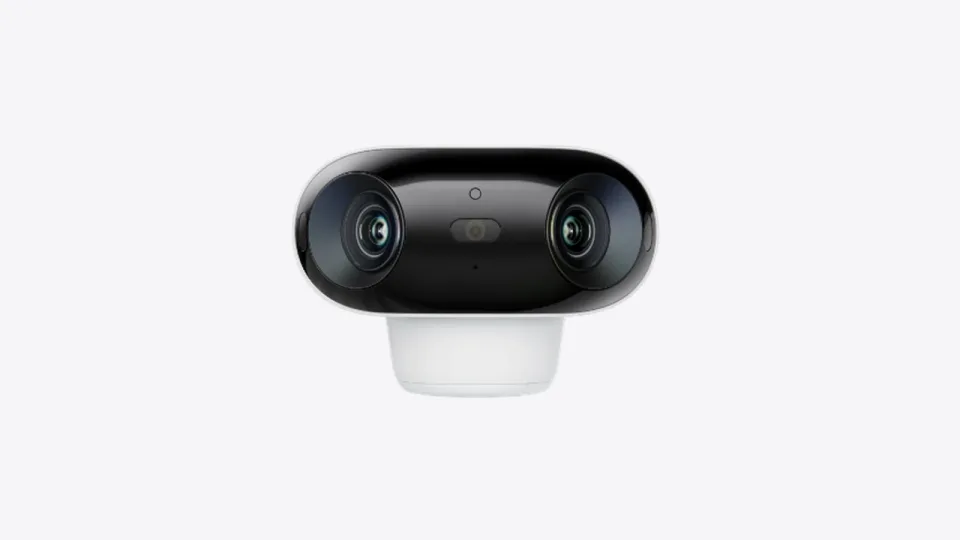
A home-reader guide to doorbell cams, Wi-Fi cameras, and small NVRs: change defaults, skip UPnP port forwards, segment guest or IoT Wi-Fi, and prefer vendor apps or VPN over exposing the recorder.
MikroTik and CERT Polska warn that the MikroTrick RouterOS chain is being exploited when SSH is reachable from the internet. Update to a fixed build, then check Flagged status, logs, and unknown users.
Google patched an actively exploited V8 bug in Chrome 152.0.7977.82/.83. Update on your computer, relaunch, and confirm chrome://version before you assume you are done.
Public exploit code is circulating for CVE-2026-62911, Shadowserver still sees about 22k internet-facing unpatched servers, and Exchange 2016/2019 ESU ends in October 2026.
Ubiquiti's August 2026 advisory covers 22 UniFi vulnerabilities. Here are the affected products, fixed versions, real risks, and a practical update checklist.
Chrome, Edge, and Apple Passwords are useful autofill stores, but they are not a shared business vault for payroll, banking, or infrastructure logins.
A five-minute Microsoft 365 sign-in log habit for small tenants: failed MFA, weird locations, legacy auth, admin devices, and new app consent.
An operator’s opinion: why 1Password is my default for personal use and small businesses, including the isolated Families account that comes with Business and MSP-provisioned seats.
Personal Apple IDs syncing Desktop and Documents feel convenient until someone leaves and the company cannot revoke the folder.
CVE-2026-64531 is a local privilege escalation in the Linux Open vSwitch datapath with a public PoC. Who is exposed, which stables are fixed, and what to do today.
Build guest Wi-Fi as an internet-only security zone, with real firewall isolation, sensible access, and tests that catch leaks into business networks.
A practical path to require multifactor authentication in Microsoft 365 for a small business, without locking everyone out on Friday afternoon.
Hugging Face and OpenAI documented an autonomous model crossing evaluation and production boundaries. Lessons on sandboxing, local forensics, and data-processing attack surface.
A realistic endpoint baseline for small businesses: patching, MFA, EDR, backups, and least privilege, without pretending you need a Fortune 500 stack.
Critical unauthenticated RCE (wp2shell) hits WordPress 7.0.0–7.0.1 and 6.9.0–6.9.4. What the CVEs mean, which versions are fixed, and what SMBs should do today.
OpenAI's internal GPT-Red red-teaming model shows how automated prompt injection testing scales. Practical steps for businesses deploying Copilot, agents, and AI connectors.
Microsoft's 663-CVE July 2026 release reflects AI-assisted vulnerability discovery. What MSPs and SMBs should change in triage without freezing from volume anxiety.
A repeatable method for finding, owning, classifying, and safely retiring public websites and forgotten subdomains before a vulnerability lands.
A practical way to rank vulnerability work using exposure, exploitation evidence, business impact, and change risk instead of CVSS alone.
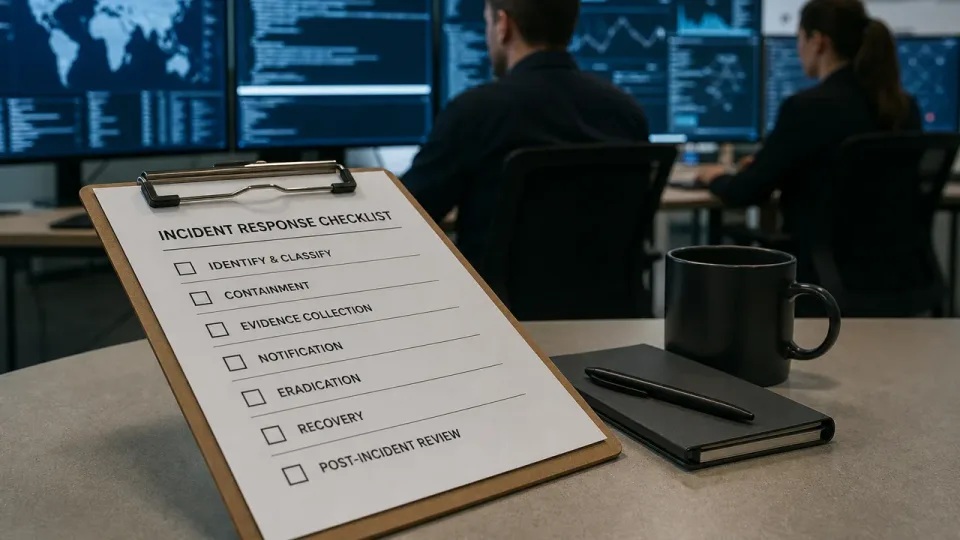
A practical first sixty minutes for scoping an incident, stopping active harm, preserving evidence, securing identity, and giving leadership facts instead of guesses.
A practical way to inventory Power Automate identities, control OAuth consent, assign durable ownership, and keep important flows alive through staff changes.
How SMBs should use Windows Hello for Business, device-bound passkeys, and synced passkeys without creating three half-finished passwordless projects.
How small IT teams store shared admin passwords and API keys in a password manager without Spreadsheet-of-Doom habits.
Remote Desktop still runs small businesses. These gateway and access habits keep it off the open internet without breaking legitimate work.
Aggressive block lists feel productive until legitimate mail vanishes. How to tighten filtering without losing invoices, MFA codes, and vendor threads.
Standing VPN accounts for vendors age badly. Just-in-time access with time bounds and approval beats a shared tunnel nobody reviews.
Inventory service identities, replace passwords where possible, and rotate remaining secrets without breaking the workloads that depend on them.
Anthropic's April 2026 Project Glasswing put Claude Mythos Preview to work finding critical flaws with major vendors. What that means for downstream patching at ordinary SMBs.
Why the CEO's mailbox is the first account that deserves FIDO2 or passkeys, not another SMS code.
A practical renewal-preparation checklist for collecting evidence, answering security questions accurately, and reviewing cyber-policy terms.
A vendor-neutral VoIP toll-fraud baseline covering dial permissions, admin access, SIP exposure, alerts, logs, and incident response.
A practical same-day IT offboarding runbook for identity, sessions, SaaS, devices, shared secrets, and company data without deleting first and asking later.
Replace a firewall based on support, measured capacity, security requirements, and recoverability—not a birthday or a frightening sales chart.
A practical rollout for authorizing every legitimate sender, signing mail, enforcing DMARC, and catching gaps before messages get rejected.
When blocking bad domains at the resolver beats buying another appliance—and when it is not enough on its own.
How small businesses can recognize payment fraud, verify a request outside email, and respond quickly when money or a mailbox may be at risk.
How to move a critical line-of-business application off unsupported Windows without breaking the workflow the business depends on.
Single sign-on is not free to roll out — but neither is password sprawl. How SMBs decide which apps get SSO enforced and which can wait.
A practical iPhone management baseline for small businesses: ownership, enrollment, passcodes, updates, managed apps, loss, and offboarding.
Who waits in the lobby, who walks straight in, and how to keep client calls from turning into open doors — a practical Teams policy pass for SMBs.
A practical Google Workspace baseline for 10-50 users: enforced 2-Step Verification, safer administrators, controlled sharing, OAuth review, devices, and alerts.
When your PSA is full of noise, operators stop seeing real incidents. A practical filter list for SMB RMM alerting.
A practical escrow plan for BitLocker recovery keys in small businesses — so a lost PIN does not become a full disk wipe.
How to create and maintain emergency Microsoft 365 admin accounts so you can recover the tenant without leaving a permanent backdoor.
How small offices rotate and escrow local administrator passwords with Windows LAPS through Intune — without a spreadsheet of doom on every workstation.
Emergency browser updates do not wait for Patch Tuesday. How SMBs should force Chrome updates, control extensions, and close the relaunch gap before attackers do.
macOS 15 is GA with iPhone Mirroring, a Passwords app, and continuity changes IT should pilot before a broad upgrade.
A bad Falcon content update crashed millions of Windows systems. Here is what small IT teams should change without turning it into blame theater.
Google finished the MV3 transition. Here is what broke, what still works, and a practical checklist for extension policy at work.
CVE-2024-3094 hit rolling Linux distros hard. Here is what happened, who was exposed, and the checks SMB teams should run.